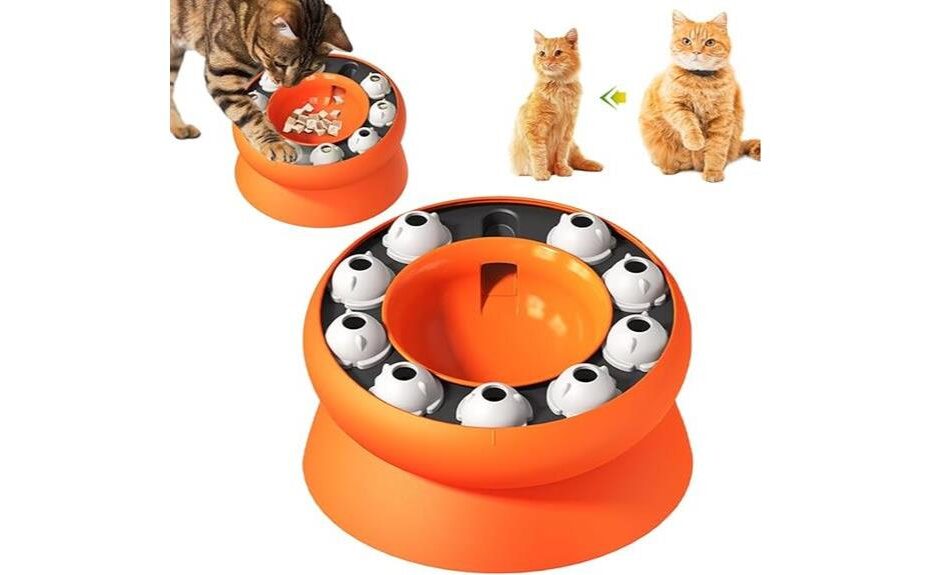
A cat slow feeder serves as an excellent solution to enhance mealtime habits and promote better health in cats. Its engaging puzzle design encourages mental stimulation, allowing cats to think and problem-solve as they eat. This not only prevents rapid consumption—reducing the risk of obesity and digestive issues—but also mimics natural hunting behaviors. Users report improved eating habits and positive changes in their pets' behavior. While initial adaptation can be challenging for some cats, the benefits often outweigh the drawbacks. Discover the varied user experiences and insights that can help you choose the right feeder for your feline companion.
Enhances Cat's Mental Stimulation
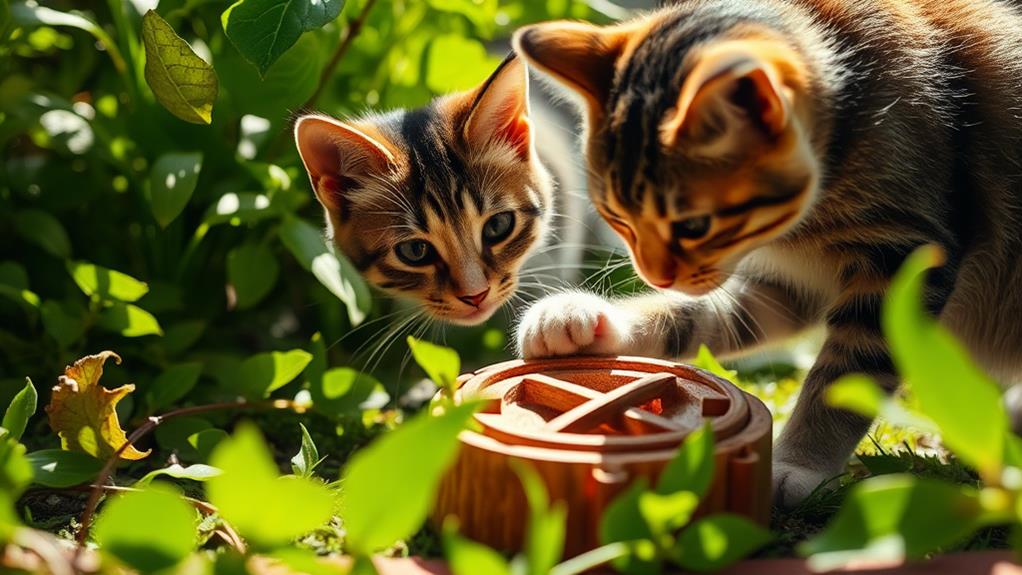
One of the key benefits of a cat slow feeder is its ability to enhance a cat's mental stimulation. By transforming mealtime into an engaging activity, these feeders require cats to navigate a puzzle-like design, which encourages problem-solving and independent thinking.
As cats interact with the feeder, they are challenged to strategize their approach to accessing the food, fostering cognitive development. This stimulation is particularly vital for indoor cats, who may lack the opportunities for natural exploration and hunting.
Promotes Healthy Eating Habits
The design of a cat slow feeder not only enhances mental stimulation but also plays a significant role in promoting healthy eating habits. By encouraging cats to engage with their food, these feeders prevent rapid consumption, which can lead to digestive issues and obesity.
The interactive nature of the slow feeder requires cats to work for their meals, mimicking natural hunting behaviors. This method not only prolongs mealtime but also instills a sense of satisfaction and fulfillment.
Furthermore, the gradual intake of food supports better digestion and nutrient absorption, contributing to overall feline well-being. For pet owners dedicated to fostering healthier lifestyles for their cats, integrating a slow feeder into mealtime routines is a valuable and effective strategy.
Personal Experience

Having observed my cat's eating habits over time, I decided to incorporate a cat slow feeder into her routine, hoping to address her tendency to consume food too rapidly.
Initially, she exhibited some confusion, taking a few days to understand the mechanics of the feeder. However, with patience and encouragement, she began to engage with it more effectively.
The slow feeder not only elongated her mealtime but also stimulated her cognitive abilities as she navigated the food boxes.
I noticed a positive shift in her digestion and overall demeanor, reinforcing the benefits of slow feeding.
This experience has been rewarding, showcasing how a simple adjustment can significantly enhance a feline's health and well-being.
Usage Scenarios
Various usage scenarios for the Cat Slow Feeder can enhance its effectiveness in promoting healthy eating habits among felines.
For instance, it can be employed during mealtime to encourage slower consumption, benefiting cats prone to overeating or digestive issues. Additionally, the feeder can serve as an interactive puzzle during playtime, stimulating mental engagement while providing nourishment.
Implementing the slow feeder during feeding routines in multi-cat households can help manage competition for food, allowing each cat to eat at their own pace.
Furthermore, it can be used when introducing new diets or treats, making the transition smoother and more enjoyable.
Each scenario not only promotes healthier eating but also enriches the overall experience for both cats and their guardians.
Ingredients and Benefits

In evaluating the Cat Slow Feeder, it is essential to consider the key ingredients that contribute to its effectiveness.
The combination of food-grade materials and the innovative design not only enhances mealtime but also supports digestive health and weight management.
Understanding these components will help pet owners appreciate the benefits of incorporating a slow feeder into their cat's routine.
Key Ingredient #1
The primary ingredient often associated with cat slow feeders is high-quality kibble or dry cat food, which offers several nutritional benefits essential for feline health.
These premium formulations are typically rich in protein, crucial for muscle development and overall vitality in cats. Moreover, they often contain essential fatty acids that support skin and coat health, ensuring your feline companion looks and feels its best.
High-quality kibble also includes vital vitamins and minerals that contribute to a robust immune system and optimal digestive function.
Key Ingredient #2
Another significant ingredient to consider in conjunction with high-quality kibble is wet cat food or canned food. This addition not only enhances palatability but also contributes vital moisture to your cat's diet, which is essential for proper hydration and kidney health.
The softer texture of wet food can be particularly beneficial for older cats or those with dental issues, making mealtime easier and more enjoyable. Furthermore, wet food is often rich in protein and contains fewer carbohydrates than dry kibble, aligning with a feline's natural dietary needs.
Key Ingredient #3
High-quality protein sources are essential for a cat's diet, playing a crucial role in maintaining muscle mass and overall health.
When selecting a slow feeder, consider those that incorporate premium proteins like chicken, turkey, or fish. These ingredients not only promote optimal growth and energy levels but also support healthy skin and a shiny coat.
Additionally, the presence of essential amino acids in these proteins aids in tissue repair and immune function, enhancing your cat's well-being.
By choosing a slow feeder that prioritizes these nutritional components, you empower your feline companion to enjoy a balanced diet while developing healthier eating habits.
This thoughtful approach nurtures their physical health and contributes to their happiness, ultimately benefiting both pet and owner.
Usage Instructions
To effectively use the Cat Slow Feeder, begin by selecting appropriate dry food or treats that fit within the designated food boxes.
Carefully fill each box, ensuring they are not overcrowded to facilitate easy access for your cat.
Introduce the feeder gradually, allowing your feline companion to explore and understand how to manipulate the boxes.
It may be beneficial to start with smaller, enticing treats to maintain engagement.
Monitor your cat's interaction, as some may require more time to adapt than others.
Regularly clean the feeder to maintain hygiene, and adjust the food portions based on your cat's needs.
This thoughtful approach ensures a positive feeding experience, promoting both physical and mental stimulation for your beloved pet.
Effectiveness

The Cat Slow Feeder demonstrates significant effectiveness in promoting healthier eating habits among cats. By encouraging slow eating, this feeder aids in digestion and helps prevent obesity, particularly beneficial for overweight felines.
The design challenges cats to engage with their food, transforming mealtime into an enriching experience that stimulates their cognitive abilities. As they navigate the nine food boxes, they develop problem-solving skills and independent thinking, essential for their overall well-being.
Furthermore, the feeder's functionality minimizes the risk of rapid eating, which is linked to gastrointestinal issues. Overall, the Cat Slow Feeder is a valuable tool for pet owners committed to enhancing their cats' health and encouraging mindful eating practices during mealtimes.
Customer Reviews and Feedback
Customer reviews for the Cat Slow Feeder reveal a generally positive reception, with many users noting significant improvements in their cats' eating habits.
However, some negative feedback highlights challenges with assembly and initial usage.
This balance of experiences provides valuable insights into the product's overall effectiveness and usability.
Overall Customer Rating
Many cat owners have reported positive experiences with the Cat Slow Feeder, emphasizing its effectiveness in promoting healthier eating habits. Customers appreciate how the feeder encourages their cats to slow down during mealtime, ultimately aiding in digestion and weight management.
The design, with its interactive puzzle element, has been noted to stimulate mental engagement, benefiting both the physical and cognitive health of their pets. However, some users have mentioned an initial learning curve, with varying adaptability among different cats.
While most cats quickly acclimated to the feeder, others required additional time and smaller treats to engage fully. Overall, customer feedback highlights the product's contribution to improved mealtime behaviors and overall feline well-being.
Postive Reviews
Positive reviews for the Cat Slow Feeder highlight its effectiveness in transforming mealtime routines for a variety of feline companions.
Many customers report noticeable improvements in their cats' eating habits, with slower consumption leading to enhanced digestive health and weight management.
Users appreciate the engaging design, noting that it encourages their pets to think critically and problem-solve, contributing to overall mental stimulation.
The feeder's durable, safe materials further reassure pet owners concerned about their cats' well-being.
Additionally, customers commend the easy cleaning process, which simplifies maintenance.
Negative Reviews
What challenges do users encounter with the Cat Slow Feeder?
Some customers report difficulties in the initial setup, particularly with filling and assembling the feeder.
The design, while innovative, can pose a learning curve for certain cats; some adapt quickly, while others may struggle, leading to frustration for both pet and owner.
Additionally, variability in cat behavior means that not all felines engage with the feeder equally, which can hinder its effectiveness.
Users have also noted that smaller treats may enhance interaction, but this requires adjustments to feeding habits.
Pros and Cons
When considering a cat slow feeder, it is essential to weigh both its advantages and disadvantages. Understanding these pros and cons can assist pet owners in making informed decisions that best suit their feline companions. Below are some key points to consider:
- Pros:
- Encourages slower eating, promoting better digestion
- Functions as a puzzle toy, enhancing cognitive skills
- Made from safe, durable materials
- Easy to clean and maintain
- Can aid in weight loss for overweight cats
- Cons:
- Initial learning curve for some cats
- Potential difficulty with assembly and filling
- Varying levels of adaptability among different cats
- May require smaller treats for optimal engagement
- Some users report stability issues with certain designs
Pros
One of the key advantages of the Cat Slow Feeder is its ability to promote healthier eating habits among felines. By encouraging slower consumption, this feeder aids in digestion and helps prevent issues such as obesity and bloating, making it an excellent choice for cat owners concerned about their pet's well-being.
Additionally, the feeder's unique design challenges cats, stimulating their mental faculties and enhancing problem-solving skills. This engagement not only enriches their feeding experience but also contributes to overall brain development.
Made from safe, food-grade materials, it ensures worry-free use, while its easy-to-clean features make maintenance straightforward. Ultimately, the Cat Slow Feeder is a valuable investment in a cat's health and happiness, fostering a more mindful approach to mealtime.
Cons
While the Cat Slow Feeder offers numerous benefits, there are also notable drawbacks that potential buyers should consider.
One significant concern is the initial learning curve; some cats may struggle to understand the feeder's mechanics, leading to frustration during mealtime.
Additionally, the assembly process can be cumbersome, with feedback indicating that filling the compartments may require patience and dexterity.
The variability in cat adaptability means that not all felines will embrace the feeder immediately, potentially leading to inconsistent feeding habits.
Lastly, while the feeder promotes engagement, it may not be suitable for all cats, particularly those with pre-existing health issues or diminished mobility, which could limit their ability to interact effectively with the product.
Overall Positive User Experience
Numerous cat owners have reported an overall positive user experience with the Cat Slow Feeder, highlighting its effectiveness in promoting healthier eating habits.
Many users appreciate the feeder's design, which encourages their feline companions to engage in slow eating, ultimately aiding digestion and weight management. Feedback indicates that while there may be an initial learning curve for some cats, the majority adapt quickly, enjoying the puzzle-like experience.
Owners have noted improvements in their pets' behavior, as the feeder stimulates mental engagement and reduces the likelihood of overeating. Additionally, the durable, safe materials and easy cleaning process enhance user satisfaction.
Ready To Give It a Try?

If your cat struggles with overeating or exhibits signs of boredom during mealtime, the Cat Slow Feeder might be the perfect solution to enhance their dining experience.
This innovative tool not only encourages healthier eating habits but also transforms mealtime into an engaging activity. By requiring your cat to push food boxes to access their meal, it stimulates their mental faculties and promotes independent problem-solving.
As you consider introducing this feeder, be mindful of your cat's initial adaptation period. Some may take longer to master its use, which is perfectly normal.
Start with smaller treats to encourage participation and make the transition smoother. Ultimately, investing in a Cat Slow Feeder can significantly improve your cat's overall well-being and dining enjoyment.
Conclusion
In conclusion, the Cat Slow Feeder serves as an effective tool for enhancing feline feeding experiences by promoting healthy eating habits and mental stimulation. Research indicates that approximately 40% of domestic cats are classified as overweight, highlighting the importance of dietary management. The innovative design not only encourages slower eating but also stimulates cognitive engagement, contributing to overall well-being. Such features underscore the feeder's potential to positively influence the health and behavior of cats in a meaningful way.
