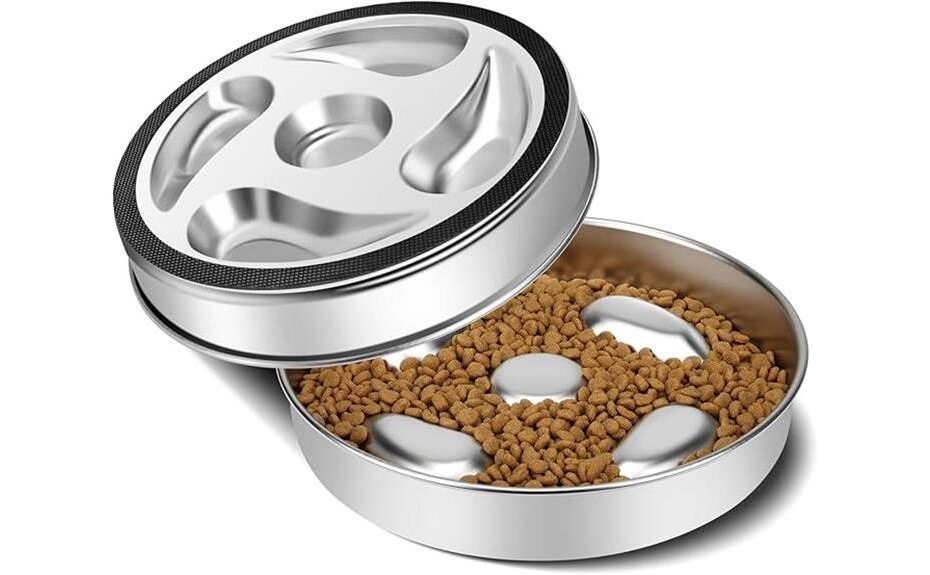
Slow feeder dog bowls are effective tools for promoting healthier eating habits in dogs. They encourage slower eating, which aids digestion and helps prevent issues like bloating and obesity. Many designs feature internal barriers that stimulate active engagement during meals, enhancing the overall dining experience. Constructed from durable stainless steel, these bowls resist wear and are easy to clean. Customer reviews generally highlight their positive impact on digestion and eating speed, although some users note varying effectiveness based on dog behavior. Understanding these aspects can lead to a better feeding strategy and overall well-being for your pet.
Slow Feeder Benefits for Digestion

Slow feeder dog bowls offer significant benefits for canine digestion by effectively regulating eating speed.
These specially designed bowls encourage dogs to consume their meals more slowly, which can help prevent various digestive issues such as bloating, indigestion, and obesity. By moderating their intake, dogs experience better nutrient absorption and a more balanced digestive process.
Additionally, slow feeders promote mindful eating habits, allowing dogs to enjoy their meals without the stress of rapid consumption. This thoughtful approach not only enhances their overall well-being but also fosters a more engaging mealtime experience.
As caregivers, providing tools that support our pets' health demonstrates a commitment to their quality of life, ensuring they thrive both physically and emotionally.
.7-Inch Square Design
The 8.7-inch square design of the slow feeder dog bowl presents a practical solution for feeding dogs of various sizes, particularly medium and large breeds.
This thoughtful design accommodates up to 3 cups of food, offering flexibility for different dietary needs. The square shape allows for efficient space usage, making it suitable for both home and outdoor feeding environments.
Additionally, the internal barriers effectively slow down eating speeds, promoting better digestion and preventing health issues related to rapid consumption.
The non-slip base enhances stability during mealtime, ensuring that the bowl remains in place while dogs eat.
Personal Experience

Having utilized the slow feeder dog bowl for my own pets, I can attest to its impact on their eating habits. The design effectively encourages my dogs to eat more slowly, which has significantly reduced instances of bloating and indigestion.
Observing my pets engage with the bowl has been rewarding; they now take their time, enjoying their meals rather than devouring them hastily. The non-slip base has also proven beneficial, ensuring the bowl remains stable during mealtime, which is particularly important for larger breeds.
Additionally, the ease of cleaning and the durable material make it a practical choice for pet owners. Overall, my experience has reinforced the value of this product in promoting healthier eating behaviors for dogs.
Usage Scenarios
Utilizing a slow feeder dog bowl can be particularly beneficial in various scenarios, enhancing both the dining experience and overall health of pets.
For dogs prone to rapid eating, such as those with a competitive temperament or a history of gastrointestinal issues, these bowls provide a crucial tool for promoting mindful consumption.
Additionally, in multi-pet households, slow feeders can help establish a more harmonious meal environment, reducing food-related stress.
Owners who prioritize their pet's well-being will find these bowls instrumental in preventing obesity and digestive problems.
Furthermore, during training sessions, integrating slow feeders can offer a stimulating challenge, encouraging interactive play while fostering a structured eating routine.
Ultimately, these bowls serve as a valuable addition to any pet care strategy.
Ingredients and Benefits
The ingredients used in slow feeder dog bowls play a crucial role in their functionality and overall benefits for canine health.
Key components, such as the durable stainless steel, contribute to the bowl's longevity and resistance to wear.
Additionally, the design features that promote slower eating can significantly enhance digestion and reduce the risk of common health issues associated with rapid feeding.
Key Ingredient #1
One essential ingredient found in many high-quality dog foods is protein, which plays a vital role in a dog's overall health and well-being.
Protein is crucial for building and repairing tissues, supporting a strong immune system, and maintaining healthy skin and coat. Additionally, it provides the necessary energy for daily activities, ensuring your dog remains active and vibrant.
High-quality protein sources, such as chicken, fish, and lamb, are particularly beneficial, as they contain essential amino acids that contribute to optimal growth and development.
By selecting dog foods rich in protein, you are not only enhancing your pet's nutritional profile but also promoting longevity and vitality.
Prioritizing protein in your dog's diet reflects a commitment to their health and happiness.
Key Ingredient #2
Omega-3 fatty acids represent a critical ingredient in high-quality dog foods, providing numerous benefits that significantly enhance a dog's health.
These essential fats contribute to improved skin and coat condition, reducing allergies and promoting a shiny appearance. Additionally, Omega-3 fatty acids support joint health, helping to alleviate discomfort associated with arthritis, particularly in older dogs.
Their anti-inflammatory properties can improve cardiovascular health and cognitive function, making them vital for overall well-being. By incorporating Omega-3s into a dog's diet, owners can foster longevity and vitality, ensuring their beloved companions lead active, fulfilling lives.
When selecting a slow feeder dog bowl, consider the potential benefits of the food served within, as these ingredients play a fundamental role in your dog's health and happiness.
Key Ingredient #3
When considering essential ingredients for a dog's diet, protein stands out as a fundamental component that supports overall health and well-being. High-quality protein sources, such as chicken, beef, or fish, provide necessary amino acids that promote muscle development, repair tissues, and bolster the immune system.
Furthermore, protein plays a pivotal role in energy production, enabling dogs to maintain an active lifestyle. For those serving pets, selecting a slow feeder dog bowl that accommodates protein-rich diets can enhance the feeding experience, ensuring that dogs consume their meals slowly and mindfully.
This deliberate pace not only aids digestion but also helps in managing weight, ultimately contributing to a healthier and happier canine companion. Prioritizing protein in their diet is essential for optimal health.
Usage Instructions
To effectively use the slow feeder dog bowl, begin by selecting the appropriate side for the type of food you are serving—dry food on one side and wet or raw food on the other.
Ensure the bowl is placed on a flat, stable surface to prevent sliding. Fill the bowl to a maximum capacity of three cups, distributing the food evenly to encourage interaction.
Monitor your dog's eating pace; if necessary, adjust the portion size to promote slower consumption.
After each use, promptly clean the bowl to maintain hygiene, as it is dishwasher-safe for convenience.
Regularly inspect for any wear or sharp edges to ensure a safe feeding experience for your beloved pet.
Effectiveness

The effectiveness of the slow feeder dog bowl can be attributed to its innovative design features, which are specifically crafted to promote healthier eating habits for dogs.
By incorporating internal barriers, the bowl effectively slows down a dog's eating speed, reducing the risks of bloating, indigestion, and obesity. This thoughtful design not only enhances digestion but also encourages dogs to engage more actively with their meal, fostering a more satisfying experience.
The non-slip base further ensures stability during mealtime, preventing spills and messes, which can be particularly beneficial for pet owners.
Customer Reviews and Feedback
Customer reviews for the slow feeder dog bowl reveal a generally favorable overall rating, with many users highlighting its effectiveness in reducing eating speed.
Positive feedback often emphasizes the bowl's quality and non-slip design, while some negative reviews point to variability in effectiveness among different dog breeds.
Additionally, concerns regarding sharp edges and size suitability for smaller breeds have been noted, underlining the importance of considering individual pet needs.
Overall Customer Rating
Overall impressions from users of the slow feeder dog bowl highlight its effectiveness in promoting healthier eating habits among dogs. Many pet owners express satisfaction with the bowl's ability to significantly slow down their dogs' eating speeds, which has been instrumental in preventing issues such as bloating and indigestion.
The dual-sided design has garnered appreciation for accommodating both dry and wet food, enhancing mealtime versatility. However, some users noted that the height of the internal barriers might not universally slow down every dog.
The non-slip base has received favorable feedback for its stability during feeding. Overall, the bowl is perceived as a valuable tool for responsible pet care, contributing positively to the well-being of dogs across various breeds.
Postive Reviews
Satisfaction among pet owners is evident in the positive reviews for the slow feeder dog bowl, highlighting its effectiveness in promoting healthier eating habits.
Many users commend its thoughtful design, noting a significant reduction in their dogs' eating speeds, which aids digestion and minimizes the risk of bloating. The non-slip base has garnered appreciation for preventing spills, enhancing the feeding experience.
Additionally, the dual-sided feature allows for versatility, accommodating both dry and wet food preferences. Pet owners particularly value the bowl's durability, constructed from stainless steel, and its ease of cleaning.
Negative Reviews
While many pet owners praise the slow feeder dog bowl for its innovative design, some negative feedback has emerged regarding its effectiveness and safety. A number of users report that the bowl does not slow down all dogs equally, citing the height of the internal barriers as a potential limitation for certain breeds.
Additionally, concerns have been raised about sharp edges, suggesting that modifications, such as silicone protection, could enhance safety. Some users also found the bowl larger than anticipated, making it less suitable for smaller breeds.
These critiques highlight the importance of considering individual dog behaviors and needs when selecting a slow feeder, ensuring that each pet's dining experience is both safe and beneficial.
Pros and Cons

When considering the effectiveness of a slow feeder dog bowl, it is essential to weigh the pros and cons.
The benefits include:
- Reduced eating speed, aiding digestion
- Versatile design for both dry and wet food
- Durable stainless steel construction
- Non-slip base that protects floors
Conversely, there are drawbacks that potential buyers should be aware of.
Pros
One of the standout advantages of the slow feeder dog bowl is its innovative design, which effectively promotes healthier eating habits for dogs.
By incorporating internal barriers, this bowl slows down the eating pace, reducing the risk of bloating, indigestion, and obesity. Its double-sided feature allows for versatility, accommodating both dry and wet/raw food, which enhances the dining experience and encourages interaction.
The non-slip base ensures stability during mealtime, protecting your floors from spills and damage. Additionally, the durable stainless steel construction is resistant to chewing and easy to clean, being dishwasher-safe.
Cons
Despite its many advantages, the slow feeder dog bowl does have some notable drawbacks.
Firstly, the effectiveness of the internal barriers can vary among dogs; some may still consume their food too quickly, undermining the bowl's intended purpose.
Additionally, the bowl's dimensions may not be suitable for smaller breeds, as it is primarily designed for medium to large dogs.
Concerns have also been raised regarding sharp edges, which may pose a safety risk; users are advised to consider silicone protection.
Lastly, while the bowl is dishwasher-safe, its larger size may require additional effort for thorough cleaning compared to traditional bowls.
These factors should be thoughtfully considered when deciding whether to invest in a slow feeder dog bowl.
Durable Stainless Steel Construction
The durable stainless steel construction of the slow feeder dog bowl not only enhances its longevity but also provides a hygienic feeding solution for pets.
This material is resistant to chewing and wear, making it an ideal choice for pet owners who prioritize both durability and safety. Stainless steel is non-porous, which prevents the growth of bacteria, ensuring a clean feeding experience for your beloved animals.
Additionally, the sleek finish allows for easy cleaning, as it can be conveniently placed in the dishwasher. This bowl is designed to withstand the rigors of daily use while maintaining its aesthetic appeal.
Investing in a slow feeder with stainless steel construction ultimately contributes to the well-being of your pets by promoting healthier eating habits.
Ready To Give It a Try?

Considering the numerous benefits associated with using a slow feeder dog bowl, many pet owners may find themselves eager to make the switch.
By investing in this thoughtfully designed bowl, you are not only enhancing your dog's dining experience but also promoting their overall health. The slow feeder encourages mindful eating, reducing the risk of bloating and indigestion, which can be particularly beneficial for larger breeds.
Additionally, its durable construction ensures longevity, making it a worthwhile addition to your pet care routine.
As you embark on this journey, consider observing your dog's eating habits and preferences, ensuring the bowl meets their needs.
Ultimately, a slow feeder bowl can be a meaningful tool in your commitment to providing the best care for your beloved companion.
Conclusion
In conclusion, the effectiveness of slow feeder dog bowls, particularly the reviewed model, appears to be contingent on individual canine behavior and breed characteristics. While the design promotes healthier eating habits by mitigating risks associated with rapid consumption, empirical evidence suggests that results may vary. Further investigation into the relationship between bowl design and specific dog behaviors could elucidate the underlying mechanisms that influence feeding patterns and overall health outcomes in dogs, thus advancing understanding in pet nutrition.
